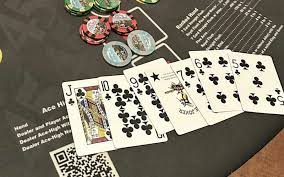
Whether you’re a casual player at a kitchen table or a seasoned competitor looking to sharpen your edge, understanding how to play the joker card effectively can make the difference between a good hand and a winning one. The joker is one of the most misunderstood and underutilized cards in the deck — but when played correctly, it’s the most powerful card you hold.
In this guide, we break down the top strategies, common mistakes, and expert-level tips to help you get the most out of your joker card. Whether you’re playing Canasta, War, Rummy, Euchre, or any variant that includes wild cards, these principles apply.
1. Know the Rules of Your Game First
Before any strategy can work, you need to understand what role the joker plays in your specific game. In some games, the joker is a wild card that can substitute for any card. In others, it carries a fixed point value. And in a few variants, it acts as a highest-ranking trump card.
For example:
• In Canasta, the joker counts as 50 points and is a wild card — highly valuable for completing melds.
• In Rummy variants, it substitutes for missing cards in sequences or sets.
• In some Poker home games, the joker acts as a bug — a semi-wild card that can complete straights, flushes, or act as an ace.
Always clarify house rules before the first deal. Misunderstanding the joker’s role is one of the most common and costly mistakes beginners make.
2. Don’t Play the Joker Too Early
Patience is key. Beginners often feel the urge to play their joker at the first opportunity, but this is almost always a mistake. The joker is most effective when the stakes are highest — when it can complete a high-scoring meld, save you from going bust, or clinch a round-winning hand.
Hold your joker until:
• You’re one card away from a winning set or sequence.
• Playing it would score significantly more points than not playing it.
• An opponent is close to winning and you need a defensive move.
Think of the joker like a trump card in negotiation — its value comes from knowing when to play it, not just that you have it.
3. Track What Your Opponents Need
Good joker play is as much about reading the table as it is about your own hand. Pay close attention to which cards your opponents pick up or discard. If you notice a player consistently collecting cards from a particular suit or rank, they may be building toward a set your joker could complete — which means you should be extra cautious about how you use yours.
In some games, if you’re holding a joker and an opponent is clearly one card away from going out, it may be worth sacrificing a lower-value hand to disrupt their strategy. The defensive use of the joker is just as legitimate as the offensive one.
4. Pair the Joker With Your Strongest Cards
When you do use your joker, make it count. Pair it with your highest-value cards to maximize the points or strategic advantage you gain. Using a joker to complete a low-scoring set when you could be completing a high-value meld is leaving points on the table.
In point-based games, always calculate the point differential: “If I use the joker here, I gain X points. If I wait, could it gain me more?” Making this a habit separates average players from consistently strong ones.
5. Bluffing and the Joker
In games where opponents can see that you haven’t played your joker, the mere knowledge that you might have one can be a strategic tool. Opponents may play more conservatively, discard cards more carefully, or avoid making moves that could trigger your joker play.
Use this to your advantage. Even if you don’t have the joker, playing with confidence and hesitating slightly before discarding can introduce doubt. And if you do have it, controlling the timing of its reveal is a psychological edge few casual players think to exploit.
6. Adapt Your Strategy to the Number of Players
The value of your joker changes with the number of players at the table. In a two-player game, its power is amplified — there are fewer wild variables. In a four- or six-player game, the table is more chaotic and your window to play the joker effectively can close quickly.
• 2-player games: Hold the joker longer; you have better information about your opponent’s hand.
• 3–4 player games: Be ready to play it mid-game; waiting too long increases the risk of someone else going out.
• Large groups (5+): Play more opportunistically; the game moves faster and unpredictably.
7. Practice With Dedicated Resources
Strategy improves fastest with focused practice and the right guidance. If you want to go deeper into joker card tips, dedicated platforms like jokercardcanada.com offer game-specific strategies, rule breakdowns, and tips tailored to Canadian card game culture. Having a go-to resource means you’re always learning between sessions, not just during them.
8. Common Joker Mistakes to Avoid
Even experienced players slip up. Watch out for these frequent errors:
• Playing the joker to complete a low-value set when a high-value opportunity is around the corner.
• Forgetting the joker’s point value — in many games, if you’re caught with it in your hand at the end of a round, it counts against you.
• Using it reactively rather than proactively — always be thinking two or three moves ahead.
• Ignoring what the discard pile reveals about opponents’ strategies.
Final Thoughts
The joker card is a game-changer — but only in the hands of a player who respects its timing and purpose. By understanding the rules, observing opponents, holding your card for high-impact moments, and adapting to the table dynamics, you’ll find that the joker becomes your most reliable ally rather than a card you play out of impulse.
Card games reward patience, observation, and strategic thinking. The joker card is the ultimate test of all three. Master it, and you’ll find yourself winning more often — and playing a much more satisfying game.
So next time you’re dealt that joker, resist the urge to play it immediately. Think it through. The best plays are almost never the fastest ones.


